
Primary 6 Perimeter II Practice
Primary 6 · 20 practice questions with instant marking and worked solutions.
Perimeter II is an important part of the Primary 6 mathematics curriculum. This topic develops distinguishing perimeter from area, formulae, units and decomposition. Begin by identifying what every number, symbol, diagram and unit represents. Translate the information into a mathematical relationship before calculating. Each line of working should have a purpose. Finally use estimation, substitution, an inverse operation, or a second representation to check the result. This habit separates a misunderstanding from a copying error and makes correction more useful.
A reliable approach to Perimeter II has four stages. First, mark the given information and the quantity required. Second, choose an appropriate representation, property or formula. Third, carry out the operations in a clear order while retaining signs and units. Fourth, return to the original context and decide whether the result is possible. For a graph or table, read the title, scale and labels before using a value. For algebra, inspect brackets, negative signs and the order of operations before simplifying.
The twenty original questions in this topic use a shared mathematical specification in Chinese and English. Difficulty rises from level 1 to level 5. Early questions establish the language and direct skills of Perimeter II; middle questions add two-step reasoning, conversions and common variations; later questions connect ideas and require a deliberate check. In multiple-choice work, calculate before looking at the choices. In fill-in and short-answer work, retain decisive steps. For true-or-false statements, support the decision with a calculation or counterexample.
Effective revision is more than recording a score. After completing the Perimeter II set, group errors by concept tags and decide whether each problem arose from interpretation, forming an expression, calculation, or presenting the answer. Retry the item on a later day without opening the solution, then test the same method with a different value. If the same tag appears repeatedly, return to the explanation and rebuild the concept. If signs or units are the issue, use a fixed pre-submission checklist.
Perimeter II should also connect with the rest of mathematics. Number and algebra supply calculation tools; measurement and geometry give spatial meaning; data handling asks what a result means. A learner who can explain aloud why every step is valid has moved beyond imitation. Estimate a reasonable range, complete an exact solution, and compare the two. Agreement between context, estimate and exact answer is strong evidence that the solution is sound.
Start practising
0 / 20 answered
-
1 BasicA rectangle has length 9 and width 4. Find its perimeter. Choose the correct answer.
-
2 BasicA rectangle has length 10 and width 5. Find its perimeter. Give the numerical value only.
-
3 BasicA rectangle has length 11 and width 4. Find its perimeter. Show the essential working and give the numerical value.
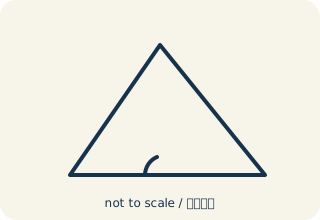
-
4 BasicIn Perimeter II, the value of $2(8+5)$ is 27. Is this statement true?
-
5 StandardA rectangle has length 13 and width 7. Find its perimeter. Choose the correct answer.
-
6 StandardA rectangle has length 14 and width 8. Find its perimeter. Give the numerical value only.
-
7 StandardA rectangle has length 15 and width 7. Find its perimeter. Show the essential working and give the numerical value.
-
8 StandardIn Perimeter II, the value of $2(12+8)$ is 40. Is this statement true?
-
9 AdvancedA rectangle has length 17 and width 10. Find its perimeter. Choose the correct answer.
-
10 AdvancedA rectangle has length 18 and width 11. Find its perimeter. Give the numerical value only.
-
11 AdvancedA rectangle has length 19 and width 10. Find its perimeter. Show the essential working and give the numerical value.
-
12 AdvancedIn Perimeter II, the value of $2(16+11)$ is 55. Is this statement true?
-
13 ChallengingA rectangle has length 21 and width 13. Find its perimeter. Choose the correct answer.
-
14 ChallengingA rectangle has length 22 and width 14. Find its perimeter. Give the numerical value only.
-
15 ChallengingA rectangle has length 23 and width 13. Find its perimeter. Show the essential working and give the numerical value.
-
16 ChallengingIn Perimeter II, the value of $2(20+14)$ is 68. Is this statement true?
-
17 EliteA rectangle has length 25 and width 16. Find its perimeter. Choose the correct answer.
-
18 EliteA rectangle has length 26 and width 17. Find its perimeter. Give the numerical value only.
-
19 EliteA rectangle has length 27 and width 16. Find its perimeter. Show the essential working and give the numerical value.
-
20 EliteIn Perimeter II, the value of $2(24+17)$ is 83. Is this statement true?
The report lists what you got wrong and why. Only you can see it.
Common mistakes
Common mistakes in Perimeter II
This topic needs particular care with distinguishing perimeter from area, formulae, units and decomposition. The first mistake is applying a remembered rule before reading all conditions. The second is compressing working so much that a sign, bracket, decimal point or unit disappears. The third is accepting an impossible answer without checking: for example, a probability above one, a negative physical length, an angle outside the geometric constraints, or a result far from the estimate. Separate the conditions, model, calculation and check, and finish by stating what the answer represents.
Keep missing the same type?
Repeating the same mistake usually means an earlier concept never landed. We find that step in the trial lesson.